Keeping Ahead of the Competition: A Look at 4 Physiotherapy Practice Management Software

Keeping up with the competition is essential for the success of your physiotherapy practice in today’s fast-paced and fiercely competitive healthcare sector.
It can be challenging to stay on top of everything with the rising demands of managing appointments, patient records, billing, and marketing.
This is where Software for managing physiotherapy practices can help your business flourish.
8 Key Features to Look for in Physiotherapy Practice Management Software
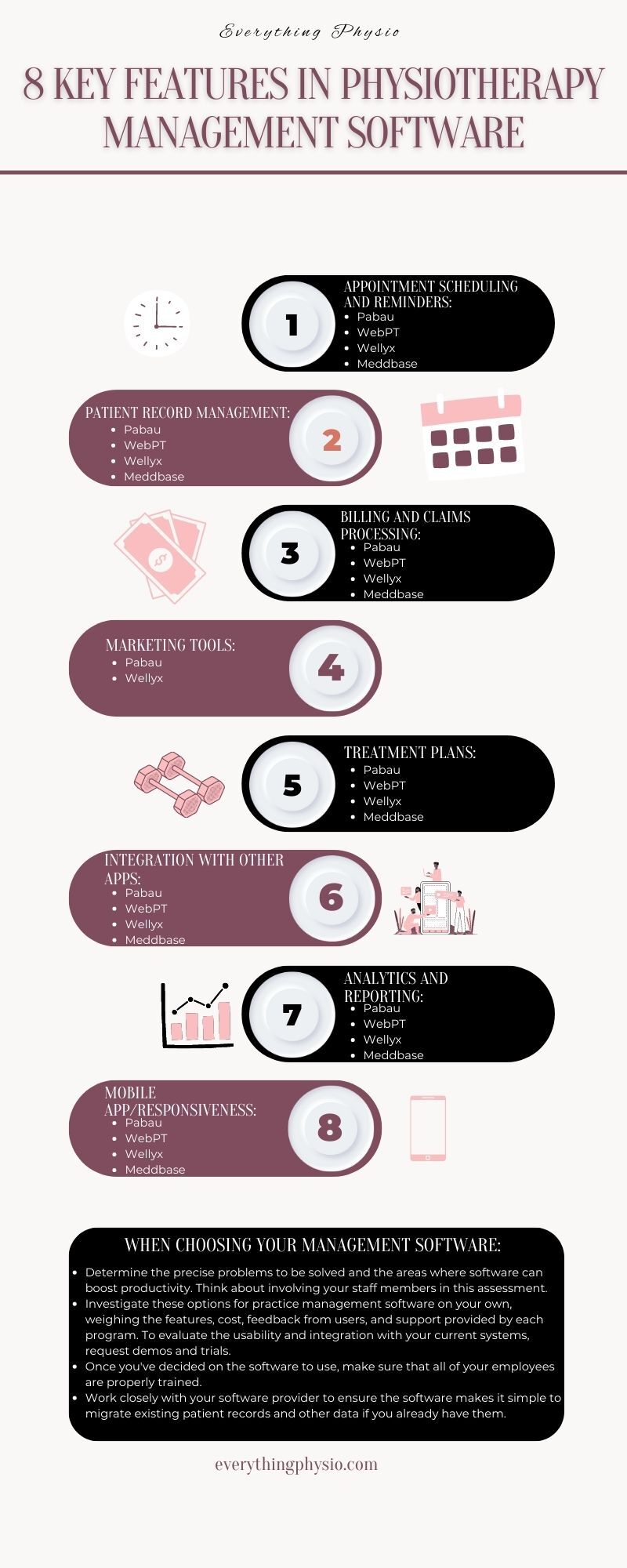
When choosing physiotherapy practice management software, it’s essential to consider the key features that will best suit your business’s needs. Here are some features to look for:
1. Appointment scheduling and reminders:
Ensure that the software offers robust appointment scheduling functionality, including the ability to set availability, send automated reminders, handle cancellations, and sync with your calendar.
2. Patient record management:
Look for software that allows you to easily create, update, and access patient records. It should also offer features such as customizable templates, document storage, and the ability to generate reports.
3. Billing and claims processing:
Choose software that simplifies your billing processes by generating invoices, tracking payments, and integrating with insurance providers for seamless claims processing.
4. Marketing tools:
Consider software that provides marketing tools such as email campaigns, patient review management, and social media integration. These features can help you attract new patients and retain existing ones.
5. Treatment Plans:
Therapy practice management software can have treatment plans that allow therapists to create customized treatment plans for their patients. These plans can include specific goals, interventions, and progress tracking. This feature helps streamline the treatment process and ensures that therapists can easily access and update patient information as needed. Additionally, some software programs may offer pre-built templates for common treatment plans, saving therapists time and effort by creating them from scratch.
6. Integration:
Another useful feature that some therapy software programs provide is integration with other APPs. As a result, therapists can easily link their treatment plans with other tools and resources they may use in their practice, like billing software or electronic health records.
7. Analytics and reporting:
Ensure that the software provides analytics dashboards and reporting capabilities. This allows you to track key performance metrics, identify trends, and make data-driven decisions.
8. Responsiveness:
This means that therapists can access and update patient information from any device with internet access, such as a computer, tablet, or smartphone. This flexibility allows therapists to conveniently review and modify treatment plans even when they are not in the office, ensuring continuity of care for their patients.
After considering these points, let’s compare and contrast the features of four therapy practice management software.
Four Leading Physiotherapy Practice Management Software
1. Pabau
Pabau is a comprehensive practice management software that caters to various healthcare disciplines, including physiotherapy. Here are some key features and benefits of Pabau, specifically for physiotherapy practices:
Appointment Scheduling:
Pabau offers an intuitive and user-friendly appointment scheduling system that allows you to efficiently manage your physiotherapy appointments. You can easily view and manage your schedule, book appointments, and make changes as needed.
Patient Management:
Pabau provides a centralized platform to manage patient information and records. You can store patient demographics, medical history, treatment plans, progress notes, and other relevant information securely in electronic health records (EHR). This helps streamline patient management and enhances continuity of care.
Treatment Notes and Documentation:
Pabau enables physiotherapists to create and store treatment notes and documentation electronically. You can customize templates to suit your specific needs, making it easier to document patient progress, assessments, interventions, and outcomes.
Billing and Invoicing:
Pabau includes billing and invoicing functionalities to streamline the financial aspects of your physiotherapy practice. You can generate invoices, track payments, manage insurance claims, and handle billing-related tasks efficiently. This helps improve revenue management and reduces administrative burden.
Marketing Tools:
Pabau offers marketing tools and features to help you promote your physiotherapy practice. You can utilize email marketing, SMS reminders, and patient communication tools to enhance patient engagement, retention, and referrals.
Reporting and Analytics:
Pabau provides robust reporting capabilities, allowing you to generate various reports and analyze key practice performance metrics. You can track appointment statistics, revenue, patient outcomes, and other important data to gain insights and make informed business decisions.
Integration Capabilities:
Pabau offers integration options with other platforms and software, such as accounting software and email marketing tools. This facilitates seamless data flow and reduces manual data entry across different systems.
Responsive design:
There is cross-browser support for iOS and Android devices , ensuring that users can access and use Pabau on any device of their choice. This responsive design enhances the user experience and allows for convenient usage on the go.
User-friendly Interface:
Pabau is known for its user-friendly and intuitive interface. The software is designed to be simple to use and learn, and it includes an on-demand instructional video series that walks users through the various features, reducing the learning curve for both practitioners and staff.
It’s important to note that specific features and functionalities may vary based on the plan or subscription you choose. It’s recommended to reach out to Pabau directly or visit their website for detailed information about their offerings for physiotherapy practices.
2. WebPT
WebPT is a specialized practice management software specifically designed for physical therapists and outpatient therapy practices.
Here are some key features and benefits of WebPT for physiotherapy management:
Documentation and Compliance:
WebPT emphasizes documentation compliance with insurance standards and regulatory requirements. It provides customizable documentation templates and flowsheets tailored to physiotherapy practices, making it easier to create comprehensive and compliant patient notes.
Scheduling and Patient Management:
WebPT offers an intuitive scheduling system to manage appointments efficiently. You can view and manage your schedule, book appointments, and track patient visits. Patient management features allow you to store patient information, track progress, and manage communication.
Billing and Revenue Management:
WebPT includes billing and revenue management functionalities to streamline the financial aspects of your physiotherapy practice. You can generate accurate electronic claims, track payments, manage denials, and handle billing-related tasks, helping optimize revenue and minimize billing errors.
Outcome Tracking and Reporting:
WebPT provides outcome tracking tools to measure and analyze patient progress and functional outcomes. This helps demonstrate treatment effectiveness and facilitates data-driven decision-making. Robust reporting capabilities allow you to generate reports on various practice metrics, track key performance indicators, and monitor financial performance.
Integrated Solutions:
WebPT offers integration with other systems to enhance workflow efficiency. It integrates with electronic health record (EHR) platforms, billing systems, outcomes tracking tools, and other third-party applications, allowing seamless data sharing and reducing duplicate data entry.
Education and Resources:
WebPT provides educational resources, webinars, and a community platform to support continuous learning and professional growth for physiotherapists. You can access a wealth of industry-specific knowledge and stay up-to-date with the latest trends and best practices.
Mobile App:
WebPT offers a mobile application that allows you to access and manage your practice on the go. You can review patient charts, update documentation, check schedules, and communicate with your team, providing flexibility and convenience.
It’s important to note that WebPT offers different subscription plans with varying features and levels of support. It’s recommended to reach out to WebPT directly or visit their website to get detailed information about their offerings and pricing specific to physiotherapy practices.
3. Wellyx
Wellyx is a cloud-based practice management software that caters to various industries, including physiotherapy practices. Here are some key features and benefits of Wellyx specifically for physiotherapy management:
Appointment Scheduling:
Wellyx offers a robust appointment scheduling system that allows you to efficiently manage your physiotherapy appointments. You can easily view and manage your schedule, book appointments, and make changes as needed. The system supports online booking options, allowing patients to schedule appointments conveniently.
Client Management:
Wellyx provides a centralized platform to manage client information and records. You can store client demographics, medical history, treatment plans, progress notes, and other relevant information securely. This helps streamline client management and enhances continuity of care.
Billing and Payment Processing:
Wellyx includes billing and payment processing functionalities to simplify the financial aspects of your physiotherapy practice. You can generate invoices, track payments, manage discounts and packages, and handle billing-related tasks efficiently. The system supports integrations with popular payment gateways, facilitating seamless payment processing.
Marketing and Communication:
Wellyx offers marketing tools and features to help you promote your physiotherapy practice and engage with clients. You can utilize email marketing, SMS reminders, and automated communication to enhance client engagement, retention, and referrals. The system also supports customer relationship management (CRM) tools to help build and maintain strong relationships with clients.
Reporting and Analytics:
Wellyx provides comprehensive reporting and analytics capabilities to track and analyze key performance metrics. You can generate reports on appointment statistics, revenue, client attendance, and other important data to gain insights into your practice’s performance. This helps you make data-driven decisions and identify areas for improvement.
Mobile App Accessibility:
Wellyx offers a mobile application that allows you to access and manage your practice on the go. You can review client information, schedule appointments, process payments, and communicate with your team, providing flexibility and convenience.
Integration Capabilities:
Wellyx supports integration with various platforms and software, such as accounting software, email marketing tools, and payment gateways. This facilitates seamless data flow and reduces manual data entry across different systems.
It’s important to note that Wellyx offers different subscription plans with varying features and pricing options. It’s recommended to reach out to Wellyx directly or visit their website for detailed information about their offerings specific to physiotherapy practices.
4. Meddbase
Meddbase is practice management software that caters to various healthcare disciplines, including physiotherapy. Here are some key features and benefits of Meddbase specifically for physiotherapy management:
Appointment Scheduling:
Meddbase offers an intuitive and efficient appointment scheduling system that allows you to manage your physiotherapy appointments effectively. You can easily view, schedule, and manage appointments, and make changes as needed. The system supports online booking options for patients’ convenience.
Patient Management:
Meddbase provides a centralized platform to manage patient information and records. You can store and access patient demographics, medical history, treatment plans, progress notes, and other relevant information securely. This helps streamline patient management and improves continuity of care.
Telehealth Capabilities:
Meddbase offers telehealth functionality, enabling physiotherapists to provide virtual consultations and remote treatment sessions. This feature allows you to expand your reach, provide care to patients remotely, and offer flexible appointment options.
Billing and Invoicing:
Meddbase includes billing and invoicing functionalities to streamline the financial aspects of your physiotherapy practice. You can generate invoices, track payments, manage insurance claims, and handle billing-related tasks efficiently. The system supports integration with popular accounting software for seamless financial management.
Reporting and Analytics:
Meddbase provides comprehensive reporting and analytics capabilities, allowing you to generate reports on various practice metrics. You can track appointment statistics, revenue, patient outcomes, and other important data. This helps you gain insights into your practice’s performance and make data-driven decisions.
Integration Capabilities:
Meddbase supports integration with other systems and platforms such as accounting software, PACS (Picture Archiving and Communication System), and telehealth platforms. This allows for seamless data sharing, reduces duplicate data entry, and improves workflow efficiency.
Data Security and GDPR Compliance:
Meddbase prioritizes data security and compliance with GDPR (General Data Protection Regulation) regulations. The software ensures that patient data is stored securely and privacy guidelines are followed, protecting sensitive information.
It’s important to note that specific features and functionalities may vary based on the plan or subscription you choose. It’s recommended to reach out to Meddbase directly or visit their website for detailed information about their offerings and pricing specific to physiotherapy practices.
Implementing Physiotherapy Practice Management Software in Your Business
For a smooth transition, careful planning and execution are necessary when implementing physiotherapy practice management software. Consider the following points:
- Determine the precise problems to be solved and the areas where software can boost productivity. Think about involving your staff members in this assessment.
- Investigate these options for practice management software on your own, weighing the features, cost, feedback from users, and support provided by each program. To evaluate the usability and integration with your current systems, request demos and trials.
- Once you’ve decided on the software to use, make sure that all of your employees are properly trained.
- Work closely with your software provider to ensure the software makes it simple to migrate existing patient records and other data if you already have them.